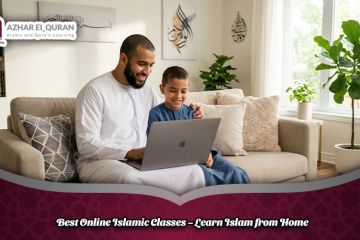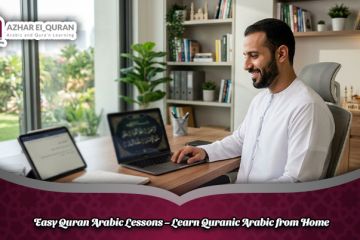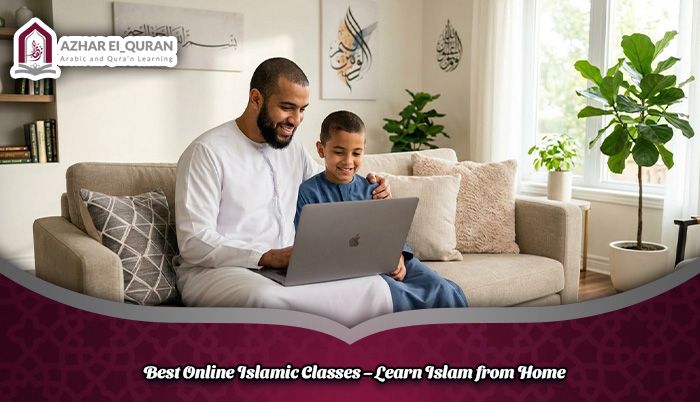
Online Islamic classes offer accessible, high-quality education in Quran recitation, Hadith, Tafsir, Islamic theology, and Arabic for learners of all ages. Azhar El-Quran Academy offers structured courses taught by qualified tutors. It allows students worldwide to study authentic Islamic knowledge at their convenience. These programs include personalized instruction, interactive learning, and progress tracking. These classes are ideal for beginners, children, and adults seeking a deeper understanding of Islamic teachings.
Online Islamic Classes offer a convenient way to study Islam, learn the Quran, and strengthen your understanding of Islamic teachings without leaving home. Whether you are a beginner, a parent searching for Islamic classes for your children, or an adult hoping to deepen your knowledge, online learning can make religious education more accessible.
Through live lessons, structured courses, and guidance from qualified teachers, students can develop their Islamic knowledge at a comfortable pace. They can explore subjects such as Quran recitation, Tajweed, Aqeedah, Fiqh, Hadith, and the Five Pillars of Islam.
For Muslims who want a structured learning experience, Azhar El-Quran Academy provides an online learning option for students seeking Islamic and Quranic education. Its courses help learners explore Islamic subjects from the comfort of their homes.
In this guide, you will learn what online Islamic education involves, which subjects you can study, how children and adults can benefit, and what to consider before choosing a course. You will also learn how to compare teachers, explore certification options, and find affordable programs that fit your needs.
What Are Online Islamic Classes?
Online Islamic Classes are structured lessons that help Muslims learn about their faith through the internet. Students attend classes using a computer, tablet, or smartphone. Depending on the program, lessons may take place through live video sessions, recorded materials, interactive activities, or a combination of these methods.
Unlike traditional classroom learning, online education allows students to study from home. This can be especially helpful for Muslim families living in areas where local Islamic schools or qualified teachers are difficult to access.
Many online Islamic studies programs follow a structured curriculum. Beginners may start with basic Islamic beliefs and daily practices before moving on to more detailed subjects. Students with previous knowledge can choose courses that match their experience and learning goals.
At Azhar El-Quran Academy, students can explore Islamic learning opportunities alongside Quranic education. When considering any academy, it is useful to review the course outline, teacher qualifications, lesson format, and available student support.
Depending on the program, online lessons may include:
- Aqeedah: Learning about Islamic beliefs and foundational principles.
- Fiqh: Understanding Islamic rulings and practical acts of worship.
- Hadith: Studying the sayings and teachings of Prophet Muhammad (peace be upon him).
- Quran studies: Developing recitation skills and learning about Quranic meanings.
- Islamic manners: Understanding good character, compassion, and responsibilities.
The right course should provide clear learning objectives and a suitable pace. Students should also have opportunities to ask questions and review what they have learned.
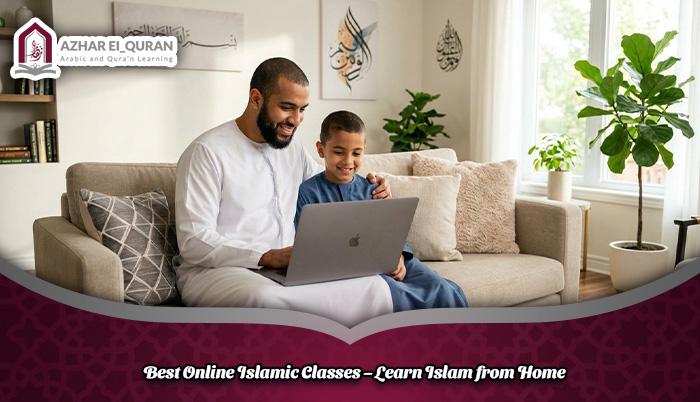
Topics Covered in Online Islamic Classes
One major advantage of online Islamic education is the variety of subjects available. Students can choose a single course or follow a broader Islamic studies program based on their age, background, and goals.
Online Aqeedah, Fiqh, and Hadith courses introduce learners to important areas of Islamic knowledge. Aqeedah focuses on beliefs, while Fiqh helps students understand practical matters such as prayer, fasting, purification, and other aspects of worship. Hadith lessons introduce the Prophet's teachings and explain their role in Muslim life.
Many programs also cover the Five Pillars of Islam. Students learn about the Shahadah, Salah, Zakah, Sawm, and Hajj, including their significance and practical application. These subjects can be particularly helpful for children, beginners, and new Muslims who want a clear foundation.
Other topics may include:
- Quran reading, memorization, and Tajweed.
- Seerah, the life and teachings of Prophet Muhammad (peace be upon him).
- Islamic history and the contributions of Muslim scholars.
- Quranic Arabic and vocabulary.
- Islamic manners, family values, and everyday responsibilities.
Some Islamic courses combine classical texts and established scholarship with contemporary teaching methods. This can make lessons more accessible without losing sight of the importance of reliable sources and respectful learning.
Before enrolling, check whether the course explains its curriculum, recommended level, and learning outcomes. A well-organized program should help students understand what they are studying and how each topic connects to their wider Islamic education.
Benefits of Online Islamic Classes for Muslims in the West
For Muslims living in Western countries, finding regular Islamic education can involve several practical challenges. A local mosque may offer limited classes, travel may be difficult, or family and work commitments may leave little time for in-person lessons.
Online Islamic Classes can help address these challenges by allowing students to learn from home. This flexibility can be useful for parents managing school routines, adults working full-time, and families living far from an Islamic institute.
Another benefit is access to teachers and courses beyond a student's immediate neighborhood. Learners can compare different academies, teaching styles, curricula, and schedules before deciding which option suits them.
Online learning can also support students who prefer individual attention. In a one-to-one lesson, a teacher may be able to focus more closely on the student's questions, understanding, and progress. Group classes, meanwhile, can provide opportunities to hear different perspectives and learn alongside other Muslims.
For children, regular lessons can help reinforce Islamic knowledge introduced at home. Adults may appreciate the opportunity to revisit foundational topics or study subjects they did not have the chance to explore earlier.
When comparing programs, look for:
- Flexible scheduling that works with your local time zone.
- Qualified teachers with relevant Islamic education and teaching experience.
- Clear course objectives and an organized learning plan.
- Appropriate class sizes and opportunities to ask questions.
- A respectful learning environment for students of different ages and backgrounds.
Online classes do not replace every benefit of a local Muslim community. However, they can complement mosque activities and family learning by making structured lessons easier to access.
Best Online Islamic Classes for Kids and Adults
Children and adults often have different learning needs. A useful Islamic education program recognizes these differences and provides suitable materials, teaching methods, and expectations for each age group.
For kids, lessons should be engaging, age-appropriate, and easy to follow. Younger learners may benefit from short activities, repetition, stories, and simple examples from everyday life. As children grow, they can explore more detailed subjects, including Islamic beliefs, worship, Quran studies, and the Sunnah.
Parents should look for teachers who can communicate clearly with children and maintain a supportive classroom atmosphere. It is also helpful to ask how progress is shared with families and whether lessons can be adjusted when a child needs additional practice.
Islamic classes for adults may focus on foundational knowledge, practical worship, Quran understanding, or more advanced subjects. Adult learners can include busy parents, university students, working professionals, and people returning to Islamic study after a long break.
Azhar El-Quran Academy is an option to explore when comparing online Islamic learning providers. Review its available courses and ask whether the curriculum matches your personal or family learning goals.
When choosing classes for any age, consider whether the program offers:
- Separate learning pathways for children and adults.
- Beginner-friendly explanations and opportunities to review.
- Lessons that respect students' backgrounds and experience.
- A suitable balance between theory and practical application.
- Clear communication about attendance, progress, and course expectations.
The most suitable class is one that meets the learner where they are and provides a realistic path for continued study.
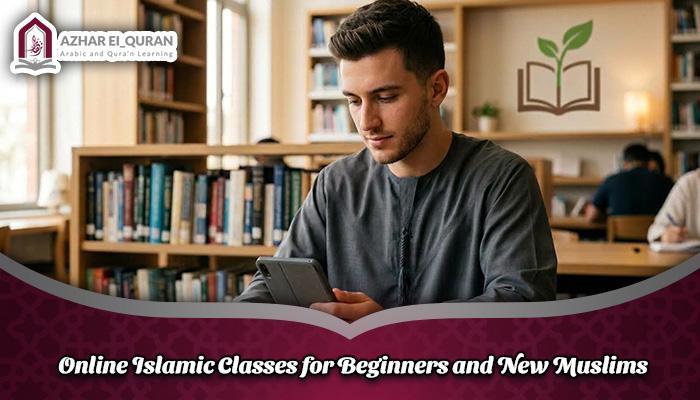
Online Islamic Classes for Beginners and New Muslims
Starting to learn about Islam can feel overwhelming when there are many unfamiliar terms, subjects, and practices to understand. Beginners and new Muslims may benefit from a course that introduces essential knowledge gradually, explains key concepts in accessible English, and allows plenty of time for questions.
A beginner's program often starts with the foundations of Islamic belief and worship. Students may learn about the Shahadah, the meaning of Salah, purification, fasting, and the importance of developing good character. Lessons can also introduce the Quran and Sunnah as central sources of Islamic guidance.
For new Muslims, a welcoming learning environment is especially important. Students should feel comfortable asking sincere questions without being embarrassed about what they do not yet know. Teachers should explain concepts patiently and distinguish between essential foundational knowledge and subjects that require more advanced study.
Online Islamic Classes may also help learners study at a pace that fits their circumstances. Someone balancing work, family responsibilities, or a new routine may prefer one or two lessons each week rather than an intensive schedule.
When exploring a course, ask whether it includes:
- A clear beginner curriculum.
- Explanations of Islamic terms in accessible language.
- Guidance on everyday acts of worship.
- Opportunities to ask questions privately or during lessons.
- Recommended resources for reviewing material between classes.
Azhar El-Quran Academy may be included in your search for a suitable provider. Before enrolling, confirm that the available course is designed for your level and that its teachers can support your particular learning needs.
A strong beginning does not require learning everything at once. Consistent study, careful questions, and reliable guidance can help learners build knowledge with confidence.
Study the Quran with Tafseer and Understand Its Teachings
Learning to read the Quran is an important step in Islamic education, but many students also want to understand what its verses mean. Quran Tafseer helps learners explore the meanings, context, and lessons of Quranic passages through established explanations and scholarly interpretation.
A Quran and Tafseer course may introduce students to the themes of different surahs, the circumstances surrounding particular revelations, and the guidance that verses offer. Teachers can explain unfamiliar Arabic terms and help learners understand how Quranic teachings relate to faith, worship, character, and daily life.
For students who are still developing their reading skills, Quran lessons may begin with Arabic letters, pronunciation, and basic recitation. As their skills improve, they can progress to Tajweed and more detailed study of Quranic meanings. Students who already read Arabic may be ready to focus more closely on Tafseer and reflection.
Online Islamic Classes can make this learning accessible to people who cannot attend regular lessons at a local institute. Live sessions also give students the opportunity to ask questions and receive explanations when a passage is difficult to understand.
When choosing a Quran Tafseer course, consider whether:
- The teacher has appropriate knowledge and teaching experience.
- Lessons identify the sources used for explanations.
- The course is suitable for your Arabic and Islamic knowledge level.
- Students are encouraged to ask questions respectfully.
- The curriculum distinguishes translation from Tafseer and explains their relationship.
Azhar El-Quran Academy is one provider to consider when exploring Quranic education. Review the specific course details to determine whether it offers the Quran reading, Tajweed, or Tafseer instruction you are looking for.
How to Choose the Best Online Islamic Classes
Choosing a course requires more than finding an attractive website or a convenient timetable. You need to understand what the program teaches, who delivers the lessons, and whether its approach suits your learning needs.
Start by identifying your main goal. You might want to learn the basics of Islam, help your child build a strong foundation, improve your understanding of worship, or study Quranic subjects in greater depth. A clear goal makes it easier to compare courses.
Next, examine the curriculum. Look for a course outline that explains the subjects, lesson sequence, expected level, and learning outcomes. If you are interested in Online Aqeedah, Fiqh, and Hadith, check that these subjects are actually included rather than assuming they are part of every Islamic studies program.
Teacher qualifications are also important. Ask about relevant Islamic studies, teaching experience, and familiarity with the needs of beginners or children. A qualified teacher should be able to explain concepts clearly, answer questions within their area of knowledge, and acknowledge when a question requires further scholarly guidance.
You should also compare the practical arrangements:
- Lesson format: Is teaching live, recorded, individual, or in a group?
- Schedule: Are lesson times suitable for your time zone?
- Class size: Will the student receive enough attention?
- Fees: Are tuition, materials, and any additional charges clearly explained?
- Progress: Does the academy provide feedback or assessments?
- Trial lesson: Can you experience the teaching style before committing?
Azhar El-Quran Academy can be part of your comparison. Review its current course information and ask questions about anything unclear. The best fit depends on your goals, available time, budget, and preferred teaching approach.
Live Islamic Classes with Qualified Teachers
Live lessons allow students to interact directly with a teacher rather than relying entirely on recorded material. This can be helpful when learning unfamiliar Islamic concepts, asking questions about worship, or receiving feedback on Quran reading and pronunciation.
During a live session, the teacher can explain a topic, invite students to discuss it, and check whether they have understood the main points. In a one-to-one class, the lesson can often be adapted to the student's pace. Group lessons may encourage discussion and provide opportunities to learn with others.
The value of a live class depends in part on the teacher's knowledge, communication skills, and preparation. Students should look for instructors with relevant qualifications and experience teaching their particular age group or level. A teacher should also create a respectful environment where questions are welcomed, and differences are handled carefully.
Online Islamic Classes may be offered by teachers based in different countries. This can expand the range of available instructors, but students should still check credentials and course details rather than relying only on location or promotional descriptions.
Before joining a live program, ask:
- How are teachers selected and assessed?
- Are lessons planned around a defined curriculum?
- Can students ask questions during class?
- What happens if a student misses a lesson?
- Is feedback provided to parents or adult learners?
- Are there options for male or female teachers where needed?
Azhar El-Quran Academy is a provider you may wish to contact about its live teaching arrangements. Confirm which courses are currently available, how lessons are delivered, and whether the teacher's experience matches your needs.
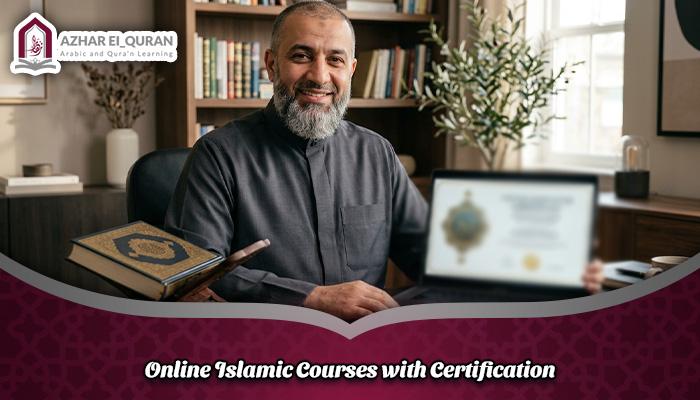
Online Islamic Courses with Certification
Some students prefer a course that provides
Online Islamic Classes for Beginners and New Muslims
a certificate when they complete the required lessons or assessments. Islamic courses with certificate options may be useful for keeping a record of learning, recognizing course completion, or demonstrating participation in a structured program.
However, certificates can differ significantly. Some confirm attendance, while others indicate that a student completed a course or passed an assessment. A certificate should not automatically be treated as a formal academic qualification, scholarly authorization, or religious license.
If certification matters to you, ask the academy what the certificate represents. Find out whether students must complete assignments, pass an exam, attend a minimum number of lessons, or demonstrate particular skills. You should also ask who issues the certificate and whether the course has any external accreditation, if that is relevant to your purpose.
For Quran studies, distinguish a general course-completion certificate from an Ijazah. An Ijazah is a specific authorization associated with transmission and learning under qualified teachers; it is not interchangeable with an ordinary attendance certificate. Students interested in an Ijazah pathway should ask detailed questions about the teacher, recitation requirements, chain of transmission, and assessment process.
When comparing Online Islamic Classes, consider certification alongside the quality of instruction, not as a substitute for it.
Before enrolling, check:
- The exact certificate title and issuing organization.
- Whether an exam or assessment is required.
- The course's completion criteria.
- Any additional certificate or examination fees.
- Whether the credential meets your intended purpose.
Azhar El-Quran Academy can be contacted to clarify whether a particular course includes certification and what its requirements are. Verify these details directly before making a decision.
Affordable Online Islamic Classes
The cost of Islamic education is an important consideration for many families. Parents may be paying for school, childcare, and other activities, while adults may need to fit lessons around work and household expenses. Affordable online Islamic classes can help make regular learning more manageable.
However, affordability should be considered alongside teaching quality and course suitability. A low price does not necessarily mean a course is right for you, just as a higher fee does not automatically guarantee better instruction.
When comparing academies, check what the tuition includes. Some programs charge per lesson, while others offer monthly packages or courses with a fixed duration. Additional costs may apply for learning materials, assessments, or certificates, so ask for a clear explanation of the total price before enrolling.
It is also worth considering how much individual attention students receive. A one-to-one lesson may have a different price structure from a group class. The right choice depends on the learner's goals, preferred learning environment, and available budget.
To compare costs carefully:
- Ask for the full fee schedule and payment terms.
- Check whether there are registration or material charges.
- Find out how cancellations and missed lessons are handled.
- Ask whether a free trial or introductory lesson is available.
- Compare lesson length, class size, and teacher qualifications.
- Confirm whether discounts or family packages are currently offered.
Azhar El-Quran Academy is one option to investigate when comparing Islamic education providers. Contact the academy directly for current prices, course availability, and any trial lesson arrangements. Do not assume that a particular discount, free course, or certificate is available unless the provider confirms it.
A suitable course should fit your budget while offering a clear curriculum, reliable instruction, and a schedule you can maintain. Consistency is often easier when the practical arrangements are realistic for you and your family.
Frequently Asked Questions
1. What can I learn in online Islamic classes?
You may study Aqeedah, Fiqh, Hadith, the Five Pillars of Islam, Quran recitation, Tajweed, Tafseer, and Islamic manners. The available subjects depend on the academy and the course you choose.
2. Are online Islamic classes suitable for beginners and new Muslims?
Yes, many programs offer beginner-level lessons that explain essential beliefs, worship, and Islamic practices in accessible language. Check that the course is designed for your experience level and allows time for questions.
3. Can children and adults attend online Islamic classes?
Yes, some academies provide separate classes or learning pathways for children and adults. Before enrolling, confirm the age requirements, teaching approach, schedule, and curriculum.
4. Do online Islamic courses provide certificates?
Some courses provide certificates of attendance or completion, while others may include assessments. Ask the provider what the certificate represents and whether it is included in the course fee.
Conclusion: Start Learning Islam from Home
Online Islamic education can help children, adults, beginners, and new Muslims develop their knowledge while managing everyday responsibilities. By comparing course content, teacher qualifications, teaching formats, schedules, and fees, you can find a program that supports your learning goals.
Azhar El-Quran Academy is one option to explore as you compare providers and look for suitable Islamic studies courses.
Ready to take the next step? Contact Azhar El-Quran Academy to ask about available courses and book a free trial lesson with a native Arabic teacher or tutor, if offered. Start building a consistent Islamic learning routine for yourself or your family today.