Noorani Qaida for beginners is a foundational guide, especially for children, to learn Arabic script and Quranic pronunciation. It introduces the Arabic alphabet, vowel sounds (harakat), and basic Tajweed rules for correct recitation.
This guide is designed for absolute beginners, including new Muslims, children, adults, and reverts who want to build a strong foundation. You do not need previous Arabic knowledge to begin. With regular practice and a qualified Quran teacher, you can learn the rules of pronunciation, recognize Arabic letters, understand basic harakat, and improve your Quranic recitation.
The right Noorani Qaida for beginners program does more than teach you how to read. It helps you develop accurate pronunciation and prepares you for basic Tajweed. Whether you choose face-to-face teaching or online lessons, a structured qaida for beginners course can make Quran learning easier and more enjoyable.
In this complete guide, you will learn what Noorani Qaida is, why it matters, how long it may take, and how to choose the right course. You will also discover how Azhar El-Quran Academy can support beginners through organized Quran learning and qualified teachers.
What Is Noorani Qaida for Beginners?
Noorani Qaida for beginners is a basic learning book used to teach students how to read the Quran correctly. It starts with Arabic letters and gradually introduces vowel signs, joined letters, words, and essential pronunciation rules. The lessons are arranged in a logical order, so students can develop one skill before moving to the next.
For absolute beginners, this approach is especially helpful. A student first learns to recognize each Arabic letter. The next step is learning how letters sound. After that, learners practice letters with different harakat and begin reading combinations. This gradual method helps children and adults build confidence without feeling overwhelmed.
A typical Noorani Qaida lesson focuses on one specific reading skill. The teacher explains the rule and then gives the student time to practice. Repeated practice is important because Quran reading requires both visual recognition and correct pronunciation.
The Noorani Qaida for beginners book also introduces concepts that later support Tajweed. Students learn how certain letters are pronounced and how different marks affect their sounds. This makes Noorani Qaida more than a simple alphabet book.
A good qaida for beginners should be taught carefully rather than rushed. The goal is not simply to finish the book. The goal is to develop the ability to read Quranic Arabic accurately, confidently, and correctly.

Importance of Noorani Qaida for Learning the Quran
The Quran is written in Arabic, and learning its letters and pronunciation is the first stage of Quran reading. Noorani Qaida for beginners provides a clear path for developing these basic skills. Instead of trying to read complete Quranic verses immediately, students first master smaller elements.
One major benefit of Noorani Qaida for beginners is that it reduces confusion. Arabic letters can look different when they appear in different positions. A structured Noorani Qaida lesson helps students recognize these forms and understand how letters work together.
It also develops correct pronunciation. This matters because changing the sound of an Arabic letter can affect the word being read. Noorani lessons introduce students to makharij, or the correct places from which Arabic letters are pronounced. This creates a foundation for future Tajweed learning.
For children, Noorani Qaida for beginners makes Quran reading easier to approach. For adults and reverts, it provides a comfortable starting point without assuming previous experience. Students can learn at their own pace and repeat difficult lessons when necessary.
Key benefits include:
- Building Arabic letter recognition.
- Improving Quran reading pronunciation.
- Understanding basic reading rules.
- Preparing for Tajweed lessons.
- Developing confidence in Quranic recitation.
- Creating a strong foundation for independent reading.
The real purpose of Noorani Qaida for beginners is to help students become accurate readers. A strong foundation makes later Quran learning much smoother.
How Long Does It Take to Complete Noorani Qaida for Beginners?
There is no single answer to how long Noorani Qaida for beginners takes. Every student learns at a different pace. A child who practices every day may progress differently from an adult who studies only twice a week. Previous Arabic experience, pronunciation ability, age, and lesson frequency can all affect the learning time.
Many students can complete a basic Noorani Qaida lesson program within several weeks or a few months when they study consistently. Some absolute beginners may need more time. That is completely normal. The goal should be accuracy rather than speed.
A student taking regular Noorani Qaida for beginners lessons may progress through stages such as:
- Learning and recognizing Arabic letters.
- Practicing letter sounds and makharij.
- Reading letters with basic harakat.
- Joining letters together.
- Learning Sukoon, Tanween, and Shaddah.
- Practicing Quranic words and short combinations.
- Applying basic Tajweed rules.
The quality of teaching also matters. A qualified teacher can identify mistakes quickly and simply explain difficult concepts. This can prevent students from developing incorrect reading habits.
With Noorani Qaida for beginners, regular practice is more important than completing a fixed number of pages. Even 15 to 30 minutes of focused practice each day can help reinforce a new skill.
Students should therefore avoid comparing their progress with others. A good Qaida for beginners program allows learners to repeat lessons until they are comfortable before moving forward.
Learn to Read the Quran with Proper Tajweed
One of the most important goals of Noorani Qaida for beginners is preparing students to read the Quran with proper pronunciation. Tajweed refers to rules that guide accurate Quran recitation. Beginners do not need to master every Tajweed rule immediately. They first need a strong foundation.
A well-designed Noorani Qaida lesson introduces students to basic pronunciation principles. The teacher demonstrates how letters should sound and corrects mistakes during practice. This is particularly important for letters that may sound similar to learners who are new to Arabic.
Noorani qaida for beginners also helps students understand how vowel marks change pronunciation. They learn how a letter sounds with Fathah, Kasrah, and Dammah. Later lessons introduce other signs and reading patterns.
Makharij al-Huruf is another important part of the learning process. Students gradually learn where sounds come from in the mouth and throat. Correct Makharij al-Huruf can make Quranic recitation clearer and more accurate.
A good teacher should listen carefully instead of simply asking students to repeat pages. Individual correction is essential. Students should know what they are doing correctly and where they need improvement.
When learners learn Noorani Qaida properly, they gain skills that can support future Tajweed study. The Noorani Qaida for beginners stage is therefore not separate from Quran recitation. It is an important foundation for it.

Learn Arabic Letters with Noorani Qaida for Beginners
Arabic letters are the foundation of Quran reading. Before students can read Quranic words, they must recognize letters and pronounce them correctly. Noorani Qaida for beginners starts with this essential skill and introduces letters in a manageable way.
For absolute beginners, Arabic can initially look unfamiliar. Some letters may have similar shapes, while their sounds are different. A structured Noorani Qaida for beginners course gives students enough practice to distinguish between them.
A teacher may begin by showing each letter separately. Students repeat its name and sound. They then practice identifying it among other letters. This repetition builds recognition and confidence.
The Noorani Qaida book also helps students understand how Arabic letters behave when they appear in different combinations. This becomes important when learners start reading connected words.
Children often benefit from short, engaging lessons. Adults may prefer a more detailed explanation of pronunciation rules. New Muslims and reverts may need additional support because they are learning both the Arabic reading system and Quranic recitation at the same time.
A strong qaida for beginners approach should focus on understanding rather than memorization alone. Students should know what they are reading and why a letter sounds a certain way.
With consistent Noorani Qaida for beginners practice, learners can gradually move from recognizing isolated letters to reading simple Quranic combinations.
Learn Noorani Qaida with a Quran Teacher for Beginners
Learning Noorani Qaida for beginner kids with a qualified Quran teacher can make the process more effective. A book can explain the rules, but a teacher can listen to your recitation and identify mistakes that you may not notice yourself.
A Quran teacher introduces each noorani qaida lesson according to the student's ability. If a learner struggles with a particular Arabic letter, the teacher can slow down and provide additional examples. If the learner understands quickly, the teacher can move to the next stage.
This personalized approach is useful for children, adults, and reverts. Young children often need patient teaching and repetition. Adults may need flexible scheduling. New Muslims may appreciate a teacher who explains unfamiliar Quranic terms in simple language.
Azhar El-Quran Academy can be a useful option for students looking for structured Quran learning with teachers. A well-organized program can help students follow lessons consistently and receive guidance as they progress through noorani qaida for beginners.
When choosing a teacher, consider qualifications, teaching experience, communication style, lesson structure, and the teacher's ability to correct pronunciation. A good teacher should encourage questions and create a comfortable learning environment.
The best Noorani Qaida experience for beginners is not about rushing through pages. It is about developing correct habits that remain useful when the student starts reading the Quran independently.
Learn Quran Joining Letters Step by Step
After learning individual Arabic letters, students need to understand how letters connect. This is an important stage in noorani qaida for beginners because Quranic words contain connected letters.
At first, joining letters can seem confusing. Arabic letters may change their appearance depending on their position within a word. A structured noorani qaida lesson introduces these changes gradually.
Students begin with simple combinations. They learn to identify each letter and then read the connected form. Repetition helps the eyes become familiar with common patterns.
The teacher should encourage students to read slowly at first. Speed is not the priority. The priority is recognizing every letter and producing its correct sound.
The Noorani Qaida for Beginners method makes this process easier by breaking longer words into smaller parts. Once students understand the individual components, they can combine them into a complete reading.
This stage is especially important for children. Young learners may recognize individual Arabic letters but struggle when they see them connected. Regular practice helps bridge this gap.
Adults and reverts can also benefit from the same gradual approach. There is no need to feel embarrassed about reading slowly. Every learner starts somewhere.
A good Qaida for beginners program allows students to repeat joining-letter exercises until they become comfortable. Once this skill develops, reading Quranic words becomes much easier.
Understand Sukoon, Tanween, and Shaddah with Noorani Qaida
As students progress through Noorani Qaida for beginners, they begin learning important Arabic reading signs. Sukoon, Tanween, and Shaddah are essential for accurate Quran reading, so students need to understand how each one affects pronunciation.
Sukoon indicates that a letter has no vowel sound. Students learn to connect the consonant sound naturally with the preceding letter. Tanween introduces an additional ending sound and appears in three basic forms. Shaddah indicates a doubled letter sound and requires careful pronunciation.
A clear noorani qaida lesson explains each sign separately before combining them. This prevents beginners from trying to remember too many rules at once.
For example, students may first practice letters with Sukoon. Once they understand that pattern, they can move to Tanween. Shaddah can then be introduced with simple examples.
The teacher plays an important role during this stage. Reading these signs correctly requires listening and repetition. A teacher can immediately correct mistakes and explain the reason for the correction.
Noorani Qaida for beginners helps learners develop these skills before they encounter them throughout the Quran. This makes later Quran reading more comfortable.
The process may seem detailed, but each rule has a purpose. When students understand the basic signs, they can read Quranic words with greater confidence and accuracy.
Online Noorani Qaida Classes for Beginners
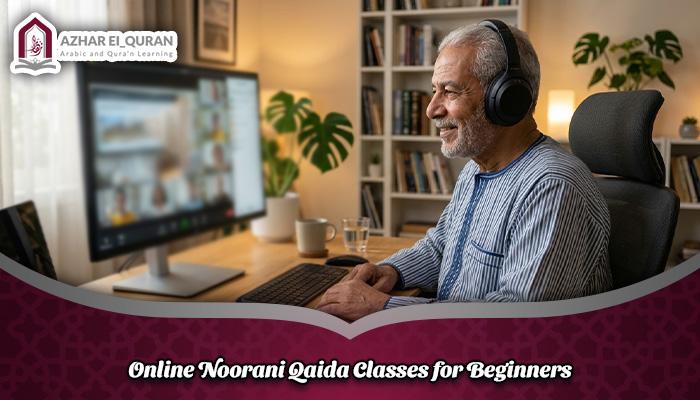
Online Noorani Qaida for beginners classes have made Quran learning more accessible. Students can learn from home without traveling to a physical classroom. This is especially convenient for busy adults, parents, children, and new Muslims.
A typical online noorani qaida lesson takes place through a live video session. The teacher shares the lesson, explains the reading rule, listens to the student's recitation, and provides corrections.
One major advantage of online learning is flexibility. Students can often choose lesson times that fit their schedules. This can make it easier to maintain regular Quran learning.
Online noorani qaida for beginners classes can also provide one-to-one attention. Individual lessons allow teachers to focus on the student's pronunciation, reading speed, and specific difficulties.
Platforms such as Azhar El-Quran Academy can help learners follow a structured approach to Quran education. Students can progress through qaida for beginners' lessons before moving toward more advanced Quran reading and Tajweed.
When learning online, students should create a quiet study space. They should keep their Noorani Qaida book available and practice between lessons. Consistency is essential.
Online learning does not remove the need for practice. Instead, it gives learners convenient access to teaching and correction. With regular Noorani Qaida for beginners lessons and personal practice, students can steadily improve their Quran reading skills.
How to Choose the Best Noorani Qaida Course for Beginners
Choosing the right Noorani Qaida course for beginners can have a major impact on your learning experience. Beginners need a course that is simple, structured, patient, and focused on correct pronunciation.
First, look at the teacher's Quran teaching experience. The teacher should understand Arabic pronunciation, makharij, and basic Tajweed. They should also know how to teach students who have little or no previous experience.
Second, consider the lesson structure. A strong noorani qaida lesson should follow a clear progression. Students should not be pushed into difficult reading before mastering the basics.
Third, check whether the course is suitable for your age and learning needs. Children may need shorter and more interactive lessons. Adults may prefer flexible schedules. Reverts and new Muslims may benefit from additional explanations of unfamiliar terms.
When comparing a Qaida for beginners course, look for:
- Qualified and experienced Quran teachers.
- Individual pronunciation correction.
- A structured Noorani Qaida curriculum.
- Flexible online lesson times.
- Regular progress monitoring.
- Basic Tajweed and makharij instruction.
- Lessons suitable for children and adults.
- A supportive environment for absolute beginners.
Azhar El-Quran Academy is a strong option to consider when looking for organized Quran and Islamic education with beginner-friendly teaching. The right course should help you learn Noorani Qaida gradually instead of making the process stressful.
Remember that the best Noorani Qaida for beginners course is not necessarily the fastest one. Choose a program that focuses on accuracy, understanding, consistent practice, and long-term Quran reading ability.
Start Your Quran Reading Journey with Noorani Qaida
Learning to read the Quran is a meaningful journey, and you do not need to know Arabic before you begin. Noorani Qaida for beginners provides a practical foundation for recognizing Arabic letters, understanding reading signs, joining letters, and improving pronunciation.
The most effective approach is gradual. Begin with basic letters. Practice their sounds. Learn harakat. Move to connected letters. Then study Sukoon, Tanween, Shaddah, and basic Tajweed. With regular practice and teacher guidance, each stage becomes easier.
Whether you are a new Muslim, revert, child, teenager, or adult, a structured Noorani Qaida for beginners course can help you develop confidence. You may progress quickly or need more time. Both are perfectly normal.
The important thing is to keep learning and practicing. A patient teacher, a suitable course, and a consistent routine can make a significant difference.
If you are ready to learn Noorani Qaida from home, consider joining a structured program such as Azhar El-Quran Academy. Start with one lesson, practice what you learn, and continue step by step. With dedication, the skills you develop through Noorani Qaida for beginners can become the foundation for confident Quran reading and beautiful recitation.