Discover the best Quran memorization techniques with this complete and practical guide and learn proven hifz methods, repetition strategies, Tajweed-based memorization, and expert tips to memorize the Quran effectively, easily, and with strong retention for all ages.
Memorizing the Quran is one of the most noble and rewarding endeavors in Islam. The Quran is a sacred book, a divine guide, and a lifelong companion for every Muslim. From the time of the Prophet Muhammad ﷺ until modern times, people across cultures and generations have devoted themselves to memorizing the entire Quran. This journey of Quran memorization is not merely about retaining words in memory; it is a spiritual, intellectual, and emotional process that strengthens the connection with Allah, refines character, and transforms daily life. In this complete Quran memorization guide, we will explore the best Quran memorization techniques that help learners memorize the Quran effectively, easily, and with long-term retention.
Whether you are just starting your hifz journey or looking to improve your memorization process, these proven techniques to memorize the Quran are designed to suit all levels. Drawing from traditional methods used since Ottoman times, modern cognitive science, and the structured approaches followed by the Leading platform Azhar El-Quran Academy, this guide will help you discover effective Quran memorization strategies rooted in dedication, consistency, understanding, and repetition.
Importance of Effective Quran Memorization Techniques
Memorizing the Quran is a noble journey that requires more than motivation alone. Effective Quran memorization techniques play a central role in transforming what may seem like a difficult task into a smooth and achievable process. Without the right techniques, many learners struggle with weak retention, frequent forgetting, and a lack of consistency. This is why scholars throughout Islamic history have emphasized following proven techniques to memorize the Quran effectively.
The Quran is a noble book, and memorizing the Quran is a noble endeavor that deserves a structured, respectful, and focused approach. Effective Quran memorization techniques help learners engage both the heart and the mind. By combining spiritual intention with practical methods, memorization becomes easier and more meaningful. These techniques allow learners to connect with the meanings of verses, enhance understanding, and strengthen memory retention over time.
Another important aspect of effective Quran memorization is consistency. Memorizing without a clear method often leads to frustration and burnout. However, when learners follow a complete Quran memorization guide supported by proven Hifz Quran Online techniques, the process becomes manageable and motivating. The journey of Quran memorization is long, especially for those aiming to memorize the entire Quran, and effective techniques provide the structure needed to stay on the path.
Modern science also supports the importance of structured memorization. Cognitive studies highlight the role of repetition, spaced learning, visualization, and audio listening in long-term retention. When these modern strategies are aligned with traditional Quranic memorization methods, learners can memorize Quran faster and more effectively. Institutions like Azhar El-Quran Academy integrate these elements into their programs, offering a balanced approach that respects Islamic tradition while benefiting from modern learning tools.

Step-by-Step Quran Memorization Techniques for Beginners
For beginners, starting the journey of Quran memorization online can feel overwhelming. The Quran contains over six thousand verses, and the idea of memorizing the entire Quran may seem daunting. However, when broken down into clear, step-by-step Quran memorization techniques, the process becomes much easier and more approachable. The first step is setting a sincere intention for Allah. Memorizing the Quran is an act of worship, and a pure intention strengthens motivation and dedication. This spiritual foundation is essential and should be renewed regularly throughout the memorization journey. Once the intention is clear, beginners should start with a realistic daily goal. Small, consistent goals are far more effective than ambitious plans that are difficult to maintain.
A common and effective Quran memorization technique for beginners is starting with short surahs from Juz Amma. These chapters are easier to memorize and help build confidence. Reading the verses multiple times while looking at the Mushaf helps create visual memory. The Ottoman Mushaf layout, commonly used in academies, supports visual consistency and enhances recall. Listening is another crucial step. Beginners should listen to a skilled reciter repeatedly before attempting to memorize. Audio repetition helps internalize pronunciation, rhythm, and Tajweed rules. This method, used for centuries, remains one of the most powerful techniques to memorize the Quran easily.
After listening and reading, beginners should memorize verse by verse. Each verse should be repeated aloud several times until it flows smoothly without hesitation. Once a verse is memorized, it should be connected to the next verse through repetition. This step-by-step method ensures strong retention and reduces errors. Daily revision is equally important. Beginners often focus on memorizing new verses while neglecting revision, which leads to forgetting. A structured revision schedule, such as revising previous verses daily before adding new ones, is a proven technique to memorize the Quran effectively. Over time, this disciplined approach builds a strong memorization foundation.
Best Quran Memorization Techniques Recommended by Scholars
Islamic scholars throughout history have developed and refined Quran memorization techniques based on experience, observation, and spiritual wisdom. These techniques, still followed today, emphasize discipline, understanding, and consistency. One of the most prominent recommendations by scholars is sticking to one Mushaf throughout the memorization journey. This consistency strengthens visual memory and helps learners recall verses by their position on the page. Scholars also emphasize the importance of memorizing with proper recitation. The Quran was revealed to be recited, and memorizing without correct Tajweed can lead to mistakes that are difficult to correct later. Therefore, learning from qualified teachers, such as those at Azhar El-Quran Academy, ensures accuracy and proper pronunciation from the beginning.
Another scholar-recommended technique is memorizing during the early hours of the day. Many scholars mention that memory is strongest after Fajr, when the mind is fresh, and distractions are minimal. This practice aligns with both spiritual traditions and modern science, which supports morning learning for better cognitive performance. Understanding the meanings of verses is another key recommendation. Scholars stress that memorization should not be a mechanical task. When learners understand the meaning and context of verses, memorization becomes easier and more deeply rooted. This approach transforms memorizing the Quran from a mental exercise into a meaningful connection with Allah’s words.
Scholars repeatedly emphasize consistency and dedication. Even small daily efforts, when maintained consistently, yield significant results over time. The journey of Quran memorization is not a race but a lifelong endeavor. Following scholar-recommended techniques to memorize the Quran effectively helps learners remain patient, focused, and spiritually connected.
Using Repetition and Revision as Powerful Quran Memorization Techniques
Repetition and revision are at the core of all effective Quran memorization techniques. The human brain retains information through repeated exposure, and the Quran is no exception. Repetition reinforces neural connections, making verses easier to recall and less likely to be forgotten. One of the most effective methods is repeating a single verse multiple times before moving on. This repetition can include Quran reading in Arabic from the Mushaf, reciting from memory, and listening to audio recitations. Combining visual, auditory, and verbal repetition strengthens memory retention and supports long-term memorization.
Revision, or muraja’ah, is equally important. Many learners underestimate the role of revision and focus solely on memorizing new verses. However, scholars and modern learning experts agree that consistent revision is essential for maintaining memorization. A structured revision plan, such as daily, weekly, and monthly revision cycles, helps preserve previously memorized portions. Spaced repetition is a modern technique supported by cognitive science. This method involves reviewing memorized verses at increasing intervals, which significantly improves retention. When applied to Quran memorization, spaced repetition ensures that verses remain strong in memory over time. Many modern Quran memorization programs incorporate this technique as part of their structured curriculum.
Repetition also strengthens fluency and confidence in recitation. When verses are repeated regularly, recitation becomes smoother, faster, and more accurate. This fluency enhances the spiritual experience of prayer and daily recitation, making the Quran a central part of life rather than a distant goal.
Quran Memorization Techniques with Tajweed
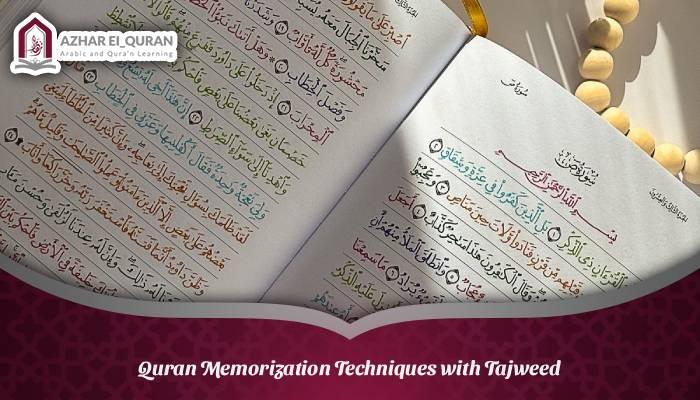
Tajweed is an essential component of Quran memorization. Memorizing the Quran without Tajweed can lead to incorrect pronunciation, which may alter meanings and reduce the quality of recitation. Therefore, effective Quran memorization techniques must include proper Tajweed from the very beginning. Learning Tajweed alongside memorization helps learners internalize correct articulation points, elongations, and rules of recitation. When verses are memorized correctly from the start, there is no need for later correction, which can be difficult and time-consuming. This approach saves effort and ensures accuracy throughout the memorization journey.
Listening to expert reciters is one of the best ways to learn Tajweed naturally. Repeated listening helps learners imitate correct pronunciation and rhythm. This auditory method has been used since the time of the Prophet ﷺ, who taught the Quran through oral transmission. Studying under qualified teachers, such as those at Azhar El-Quran Academy, provides personalized feedback and guidance. Teachers can identify mistakes early and help learners refine their recitation. This structured support is especially important for non-Arabic speakers who may struggle with certain sounds.
Memorizing with Tajweed also enhances understanding and spiritual connection. When verses are recited beautifully and correctly, their impact on the heart is stronger. This emotional connection motivates learners to continue memorizing and deepens their relationship with the Quran.
Quran Memorization Techniques for Kids, Teens, and Adults
Quran memorization techniques should be adapted to different age groups, as learning styles and cognitive abilities vary. For kids, memorization should be engaging, gentle, and consistent. Short sessions, repetition, and positive reinforcement help children memorize the Quran easily. Visual aids, listening to recitation, and memorizing in a calm environment support young learners. Teens benefit from structured goals and clear routines. At this stage, learners can handle longer memorization sessions and a more detailed understanding of meanings. Encouraging teens to reflect on verses and connect memorization with daily life strengthens motivation and retention.
For adults, Quran memorization often requires balancing learning with work and family responsibilities. Effective techniques for adults include setting realistic goals, using audio repetition during daily activities, and following a structured memorization guide. Adults often benefit greatly from understanding meanings, as comprehension enhances memory. Regardless of age, consistency and dedication remain the foundation of success. The journey of Quran memorization is unique for every individual, but with the right techniques to memorize the Quran effectively, anyone can achieve their goal of memorizing part or all of the Quran.

Tips for Quran Memorization
Successful Quran memorization requires a combination of spiritual commitment and practical strategies. One important tip is to maintain a strong connection with Allah through dua. Asking Allah for ease, understanding, and retention is a powerful source of strength throughout the memorization journey. Creating a distraction-free environment is another essential tip. Focused memorization sessions lead to better retention and faster progress. Choosing a quiet place and a fixed time for memorization helps train the mind to concentrate. Consistency is more important than speed. Memorizing a small number of verses daily with regular revision is far more effective than memorizing large portions inconsistently. Patience and dedication are key qualities in this noble journey. Understanding the meanings of verses enhances both memorization and spiritual connection. Reading translations or brief tafsir helps learners connect emotionally with the Quran, making memorization more meaningful and lasting.
Finally, seeking guidance from experienced teachers and structured programs, such as those offered by the Leading platform Azhar El-Quran Academy, provides accountability and expert support. With proven techniques, dedication, and sincere intention, memorizing the Quran becomes an achievable and deeply rewarding life goal. By following these best Quran memorization techniques, learners can transform the process of memorizing the Quran into a smooth, effective, and spiritually enriching journey. Whether your goal is to memorize a few surahs or the entire Quran, these proven methods will help you stay consistent, motivated, and connected to the noble words of Allah.
Conclusion
Memorizing the Quran is a noble and life-changing journey that combines spiritual devotion with focused learning and practical effort. The Quran is a sacred guide for humanity, and committing its verses to memory strengthens one’s connection with Allah, deepens understanding, and brings countless spiritual benefits. By following effective Quran memorization techniques, learners can transform what may seem like a challenging task into a smooth, achievable, and rewarding process.
Throughout this complete Quran memorization guide, we have explored proven techniques to memorize the Quran effectively, including step-by-step methods for beginners, scholar-recommended practices, the power of repetition and revision, and the essential role of Tajweed. Whether you are a child, teenager, or adult, the right strategies, combined with dedication and consistency, make it possible to memorize the Quran easily and with strong retention.
The journey of Quran memorization requires patience, sincerity, and regular practice. Small daily efforts, guided by structured methods and supported by experienced teachers, lead to lasting success. By seeking Allah’s help, maintaining consistency, and applying these proven hifz techniques, every Muslim can progress confidently on the path of memorizing the Quran and carry the noble words of the Qur’an in their heart for a lifetime.