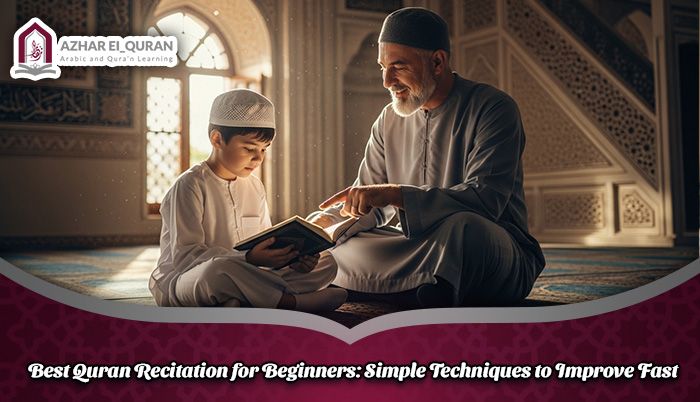
Learning the Quran recitation for beginners is a deeply rewarding journey that combines spiritual growth with linguistic beauty. For many, the desire to read the Quran correctly and fluently begins with a simple intention to connect with the words of Allah and understand their meaning. Whether you are just starting or looking to refine your skills, mastering Quran recitation requires patience, proper guidance, and consistent practice.
The journey to learn the Quran is not just about reading Arabic words; it is about feeling the rhythm, understanding the pronunciation, and experiencing the calming tone that listening to the Quran brings. Beginners find that listening to the Quran brings peace, clarity, and a sense of purpose in life. With the right approach, tools, and techniques, anyone can learn how to read the Quran correctly and beautifully.
Learning Quran recitation for beginners involves mastering basic Arabic, using the Noorani Qaida method for pronunciation, and learning Tajweed (the rules of recitation). Start by listening to experts, focusing on daily practice, and using apps like Al Siraat or Easy Quran. Engaging a qualified tutor provides essential, personalized feedback.
Beginners should start with slow Quran recitation to grasp proper pronunciation and Tajweed rules. Listening to experienced reciters and repeating after them (talaqqi) is highly effective. Use resources with audio translations, word-by-word breakdowns, and visual aids to reinforce understanding. Focus on mastering one verse at a time, ensuring accuracy over speed. Consistent daily Quran recitation practice builds confidence and fluency. Many online platforms offer beginner-friendly tools tailored for English speakers
This comprehensive guide will walk you through everything you need to know about quran recitation from the beginning, including essential rules, daily practice strategies, and expert tips to improve quickly.
What Is Quran Recitation for Beginners
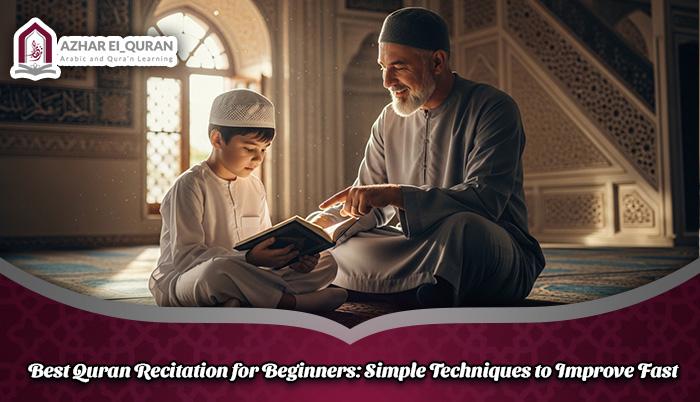
Quran recitation for beginners refers to the process of learning how to properly read and recite the Holy Quran in its original Arabic form. It is the foundation of every Muslim’s relationship with the Quran and an essential step toward holy Quran recitation and memorization.
Quran recitation for beginners is the foundational process of learning to read the Arabic text of the Quran accurately, focusing on correct pronunciation (Makharij) and basic Tajweed rules. Quran Recitation for Beginners, this journey often starts with recognizing Arabic letters, learning their sounds, and gradually forming words. Many students begin with the Noorani Qaida, a beginner-friendly book that teaches the basics of Arabic pronunciation and structure.
Tone listening to the quran brings to experienced reciters, especially those with calm, steady tones like Husayri, helps develop rhythm and confidence. Beginners should prioritize clarity over speed, practice daily, and gradually build fluency. Consistent exposure strengthens understanding and spiritual connection. Using structured guidance, such as a step-by-step Quran recitation course, can support learning effectively.
Reciting the Quran is not just reading; it is an art. The rhythm, tone, and pauses all play a role in delivering the message beautifully. When beginners learn to recite the Quran correctly, they also begin to feel its spiritual impact. Listening to the Quran in a calming tone enhances concentration and deepens emotional connection.
As beginners progress, they move from simple words to short surahs, gradually building confidence. The focus is not speed but accuracy and understanding. This is why slow Quran recitation for beginners is highly recommended, as it allows learners to absorb each word and apply the rules correctly.
Key Components of Quran Recitation for Beginners
Key components of Quran recitation for beginners include learning the Arabic alphabet, mastering articulation points (Makharij), studying basic Tajweed rules, and practicing consistent, slow reading (Tartil). Beginners should start with foundational books like Noorani Qaida, listen to expert reciters, and seek guidance from a qualified tutor to ensure accuracy.
Essential components of Quran recitation for beginners :
- Arabic Alphabet (Noorani Qaida): Understanding letter forms and sounds is the crucial first step.
- Makharij (Articulation Points): Proper pronunciation of each letter from its correct origin in the throat or mouth.
Tajweed Rules:
- Ghunnah: Producing a nasal sound for specific letters like Nun and Mim.
- Madd (Elongation): Lengthening vowels appropriately, such as in "الرحيم".
- Sakinah/Tanween: Understanding how to handle silent letters and special vowel sounds.
- Tartil (Slow Recitation): Reading in a slow, measured tone to understand, contemplate, and avoid mistakes.
- Daily Practice & Listening: Regular practice (e.g., 15-20 minutes daily) and listening to renowned reciters to learn melody and proper pauses.
- Qualified Teacher: Receiving feedback from a teacher to correct errors in pronunciation and Tajweed.
Understanding Tajweed Rules for Accurate Quran Recitation for Beginners
Tajweed is the set of rules ensuring accurate, beautiful, and authentic recitation of the Quran as revealed to the Prophet Muhammad (pbuh). For Beginners, mastering foundational rules such as proper pronunciation of letters (e.g., qalqalah, idgham), correct vowel markings (harakat), and pause points (waqf) is essential.
These rules preserve the Quran’s linguistic integrity and deepen spiritual connection. Consistent practice with qualified teachers or structured resources helps build confidence and precision. Understanding Tajweed not only improves Quran recitation for Beginners but also enhances memorization and comprehension.
Tajweed is the heart of proper Quran recitation. Without it, reciting the Quran correctly becomes difficult. For beginners, learning tajweed may seem challenging at first, but with step-by-step guidance, it becomes manageable.
Tajweed includes rules related to pronunciation, elongation (madd), nasal sounds (ghunnah), and stopping points. These rules ensure that each word is recited exactly as it was revealed.
For example, elongation rules teach beginners how long to stretch certain vowels, while stopping rules guide them on where to pause. These details may seem small, but they significantly impact the beauty and accuracy of recitation.
When beginners learn Quran with tajweed, they develop a deeper appreciation for the Quran’s structure and rhythm. It transforms recitation from simple reading into a beautiful and expressive act.
Many students benefit from combining visual learning with audio. Listening to recitations while following along in the text helps reinforce tajweed rules. Over time, these rules become second nature.
Simple Techniques to Improve Quran Recitation for Beginners Quickly
To improve Quran recitation quickly as a beginner, actively listen to expert reciters, use the "listen-and-repeat" (mimicry) method, and practice daily with small, chunked verses. Focus on mastering basic Tajweed rules like lengthening letters (Madd) and handling silent letters (Sukun) while recording yourself to identify and correct mistakes immediately.
Improving Quran recitation for beginners does not have to be complicated. With the right techniques, beginners can make noticeable progress in a short time.
Top Techniques to Improve Quran recitation for beginners quickly
- Active Listening & Mimicry: Choose a skilled reciter (Qari) and listen to a few verses, then match their tone, pace, and pause points.
- Slow and focused recitation: Rushing leads to mistakes, while slow pacing allows beginners to apply rules correctly. This is why slow Quran recitation for beginners is highly recommended.
- Chunking (Smaller is Better): Do not try to read long passages. Focus on one small section (a few words or one Ayah) until you can read it fluently, then move on.
- Record Your Recitation: Recording yourself is the fastest way to recognize errors in pronunciation and Tajweed.
- Master Silent Letters (Sukun) & Stretching (Madd): A common beginner issue is reading silent letters on their own. Instead, pair them with the preceding active letter. Also, ensure that lengthening letters are held for the correct duration.
- Daily Consistency: Dedicate at least 10–15 minutes daily to recitation, ideally after Fajr when the mind is fresh.
- Listen to Repeat: Play recordings of the Quran while doing other tasks to train your ears to pick up the correct, melodic intonation.
How to Practice Quran Recitation Daily for Faster Progress
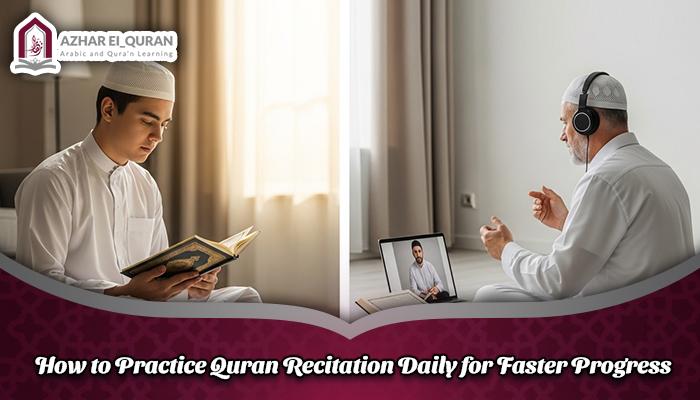
To achieve faster progress in Quran recitation for beginners, consistency is the key. Start by dedicating a specific time each day, even if it’s just 15–20 minutes, to building a strong habit. Focus on proper pronunciation and basic tajweed rules, especially if you are exploring Quran recitation for beginners.
Listening to skilled reciters and repeating after them can greatly improve your fluency and confidence. Joining structured programs like those offered by Azhar El-Quran Academy can provide guidance, feedback, and motivation. Most importantly, stay patient and sincere, as daily practice, no matter how small, leads to steady and meaningful improvement over time.
Consistency is the key to mastering Quran recitation. Daily practice, even for a few minutes, can lead to significant improvement over time.
Start by setting a fixed time each day for practice. Whether it is early morning or before النوم, having a routine helps build discipline. Begin with a short revision of previous lessons, then move on to new material.
Incorporate both reading and listening into your routine. Listening to the Quran brings peace and helps reinforce what you have learned. Combining these methods accelerates progress.
Use a structured approach. Begin with letter recognition, move to words, then sentences, and finally full surahs. This step-by-step method ensures steady improvement.
It is also important to review regularly. Revisiting previously learned material strengthens memory and prevents forgetting.
Practicing with a partner or teacher can also be beneficial. Feedback helps correct mistakes and improve pronunciation.
Best Tips to Improve Pronunciation and Fluency in Recitation
Improving pronunciation and fluency in Quran recitation requires consistent practice and the right approach. For Quran recitation for beginners, it is important to follow simple steps such as listening carefully, repeating each surah, and correcting mistakes regularly.
Platforms like Azhar El-Quran Academy provide an ideal environment where people can learn with expert guidance. Watching skilled reciters and focusing on tajweed rules helps achieve a more perfect and touching recitation. Regular Islamic studies also deepen understanding and bring barakah to your efforts. Stay committed, follow a daily routine, and use tools and resources to track progress and watch your fluency steadily improve.
Improving pronunciation and fluency requires dedication and attention to detail. One of the most effective tips is to focus on articulation points. Each Arabic letter originates from a specific part of the mouth or throat, and mastering these points is essential.
Another tip is to practice with audio recordings. Listening to skilled reciters helps beginners mimic correct pronunciation and rhythm. Many learners find inspiration in reciters known for their clear and slow style.
Reading aloud is also important. It builds confidence and helps identify mistakes. Beginners should not hesitate to repeat words until they are pronounced correctly.
Patience plays a crucial role. Fluency does not come overnight. With consistent practice, beginners gradually improve their speed and accuracy.
Engaging with the Quran emotionally also enhances fluency. When learners connect with the meaning, their recitation becomes more natural and expressive.
Learn Quran Recitation with a Qualified Teacher
Learning Quran recitation with a qualified teacher is one of the most effective ways to achieve a perfect and touching recitation. For Quran recitation for beginners, a teacher provides clear steps, corrects mistakes, and helps students follow proper tajweed rules.
At Azhar El-Quran Academy, expert tutors create an ideal environment where people can improve their skills through structured Islamic studies. They focus on pronunciation, fluency, and understanding each surah deeply.
Students also benefit from guidance on how to watch and imitate skilled reciters. With consistent effort and sincere intention, this learning journey brings barakah and leads to confident, beautiful Quran recitation.
Learning with a qualified teacher is one of the most effective ways to master Quran recitation. A teacher provides personalized guidance, corrects mistakes, and ensures that students follow proper rules.
Qualified teachers understand the challenges beginners face and tailor lessons accordingly. They provide step-by-step instructions, making the learning process smooth and enjoyable.
Studying under a teacher also ensures accountability. Regular sessions keep students motivated and consistent in their practice.
The tradition of learning the Quran through teachers dates back to the time of Prophet Muhammad, who taught his companions directly. This emphasizes the importance of guided learning.
Many beginners find that having a teacher significantly accelerates their progress and boosts their confidence.
Online Quran Recitation Classes for Beginners
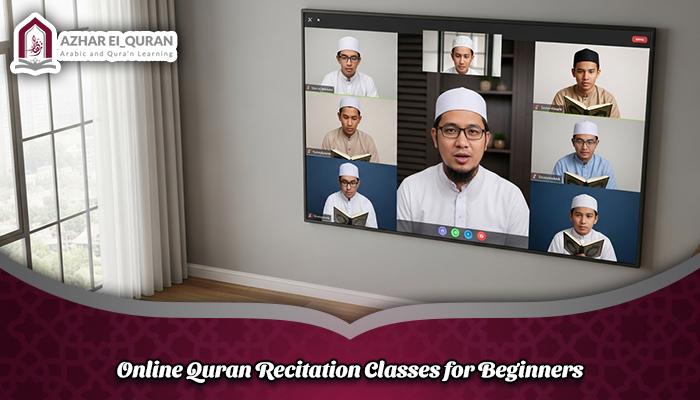
Online Quran recitation classes are perfect for beginners who want to learn from home with ease and flexibility. Platforms like Azhar El-Quran Academy offer structured programs designed specifically for Quran recitation for beginners and those starting quran for beginners.
These courses focus on proper pronunciation, tajweed, and building confidence in Qur'an recitation step by step. With expert teachers, each lesson ensures recitation focuses on accuracy and fluency, making it perfect for beginners.
Students also experience the calming tone of listening to the quran, which enhances spiritual connection. Through interactive online quran sessions, learners can easily read the quran for beginners and progress effectively.
Online Quran classes provide flexibility, convenience, and access to qualified teachers from around the world. Platforms like the Leading platform, Azhar El-Quran Academy, offer comprehensive programs designed specifically for beginners. These programs include personalized lessons, interactive tools, and structured curricula.
Online classes are ideal for those with busy schedules. Students can choose timings that suit them and learn at their own pace. This flexibility makes it easier to stay consistent. These classes often include audio, video, and live sessions, making learning engaging and effective. Beginners can practice recitation, receive feedback, and track their progress.
For many, online learning has transformed the way they learn Quran, making it more accessible and enjoyable.
Conclusion
Embarking on the journey of quran recitation for beginners is a meaningful and life-changing experience. It is not just about learning to read Arabic words but about connecting with the divine message and experiencing its beauty.
With the right techniques, consistent practice, and proper guidance, anyone can improve their recitation quickly. Whether you choose to learn independently or with a teacher, the key is dedication and sincerity.
Remember, every step you take in learning the Quran brings you closer to understanding its message and strengthening your faith. Start today, stay consistent, and enjoy the spiritual rewards of this beautiful journey.